

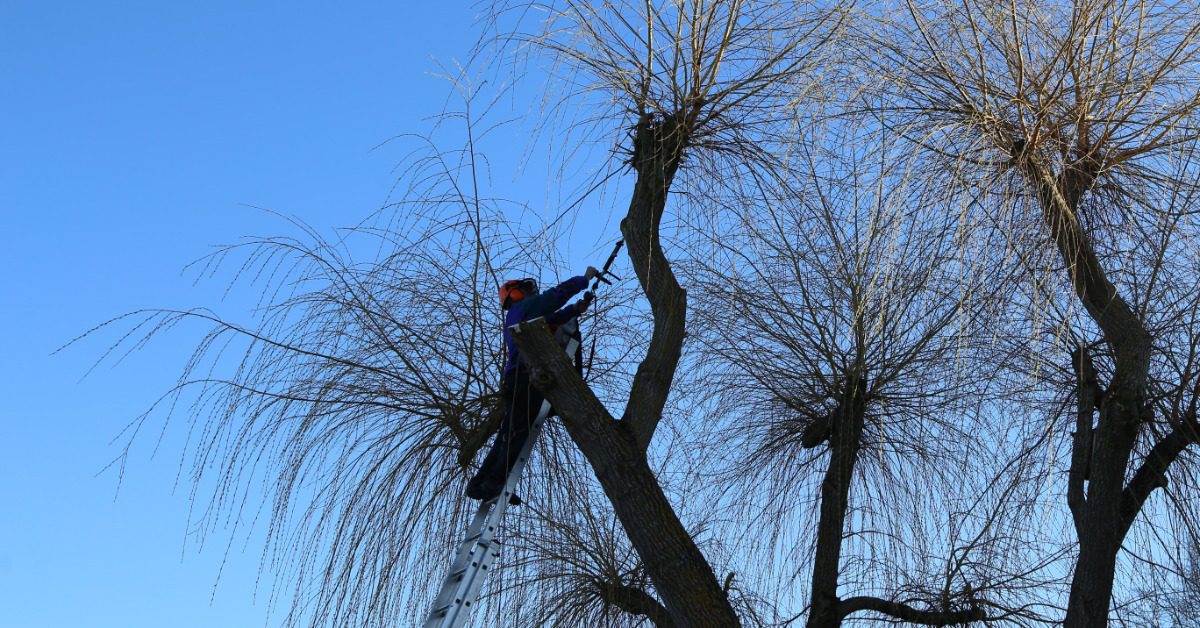
Healthy, mature trees add beauty, shade, and long-term value to any property. Proper pruning helps those trees remain structurally sound while supporting healthy growth for decades. Unfortunately, many property owners still hear outdated advice that encourages tree topping as a quick fix for oversized trees. These recommendations often create far more problems than they solve.
At Great Plains Tree Care, we believe every pruning decision should support the biological needs of the tree. Our Nebraska-certified arborists use proven pruning methods that improve structure and preserve the natural form of each species. We never rely on shortcuts that compromise tree health or create unnecessary hazards. Our philosophy guides every trimming project we perform throughout the Omaha metro area. We’re explaining why crown thinning is better than tree topping in the guide below.
The Difference Between Crown Thinning and Tree Topping
Many homeowners assume every pruning method accomplishes the same goal. In reality, crown thinning and tree topping represent two completely different approaches with dramatically different outcomes. One method protects the tree, while the other permanently damages it.
Crown thinning selectively removes carefully chosen interior branches throughout the canopy. This process allows more sunlight and air movement while maintaining the tree’s natural shape and structural integrity. Skilled arborists evaluate branch spacing, weight distribution, and future growth before making every pruning cut.
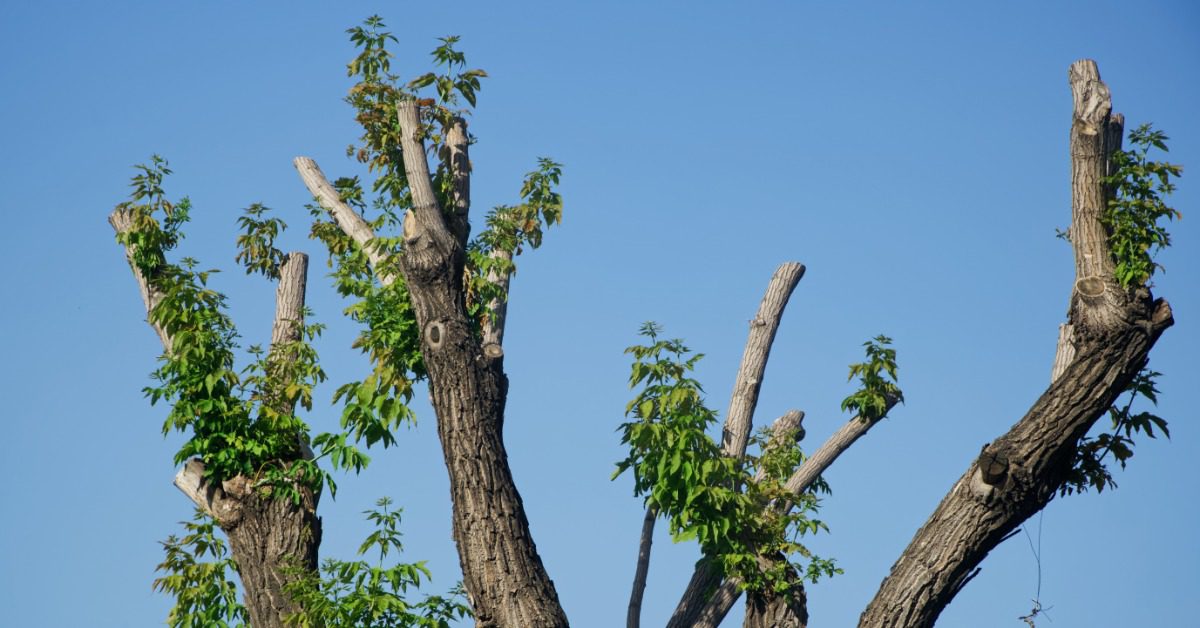
Tree topping removes the upper portion of the canopy by cutting large branches back to stubs or lateral branches that cannot properly support future growth. The tree loses much of its leaf-producing surface almost immediately. A severe loss forces the tree into survival mode rather than healthy development.
Why Tree Topping Causes Lasting Damage
Many property owners choose topping because they want immediate height reduction. Although the tree becomes shorter, the consequences begin almost immediately. Every topping cut creates significant stress that affects the tree for years.
Large topping wounds expose living wood directly to the environment. Unlike proper pruning cuts, these oversized wounds struggle to seal effectively. Moisture, fungi, insects, and disease organisms gain easy access through exposed tissue before the tree can compartmentalize the injury.
Trees depend on leaves to produce energy through photosynthesis. Removing a large percentage of the canopy dramatically reduces the tree’s ability to generate food. The remaining energy reserves become depleted as the tree attempts to survive and replace lost foliage.
How Improper Topping Damages the Vascular System
The most serious effects of topping occur beneath the bark where homeowners cannot see them. Trees contain an intricate vascular system that transports water, nutrients, and carbohydrates throughout every branch and root. Large topping cuts interrupt those essential pathways and permanently alter normal biological function.
Every major branch contains specialized vascular tissue that connects directly to the trunk and root system. When large sections disappear suddenly, those transportation networks suffer extensive disruption. The tree must redirect resources toward emergency survival rather than balanced growth.
Pathogens Find Easy Entry Through Topping Wounds
Trees naturally defend themselves against disease when pruning follows proper arboricultural standards. Correct cuts preserve branch collars and allow the tree to compartmentalize damaged tissue efficiently. Topping eliminates those natural defense advantages.
Large exposed wounds provide ideal entry points for fungal spores, bacterial pathogens, and wood-decaying organisms. Once these microorganisms establish themselves inside the trunk or scaffold branches, complete elimination becomes nearly impossible. The infection often spreads deeper into structural wood over time.
Several common decay fungi target stressed hardwood species throughout Nebraska. These organisms slowly consume wood fibers while reducing the tree’s structural integrity. Homeowners frequently discover the damage only after branches begin failing during storms.
Crown Thinning Promotes Stronger, Healthier Growth
Professional crown thinning improves tree performance without sacrificing long-term health. Instead of removing large portions of the canopy, arborists selectively reduce overcrowding within the crown. The tree continues functioning normally while benefiting from improved structure.
Better airflow decreases moisture buildup between dense branches. Reduced humidity limits favorable conditions for many fungal diseases that thrive in crowded canopies. Increased sunlight also encourages healthier leaf development throughout the tree.
Balanced branch spacing distributes weight more evenly across the canopy. Stronger branch architecture reduces stress during high winds, heavy snow, and ice accumulation. Proper structural balance lowers the likelihood of branch failure without compromising natural appearance.
The Safety Risks Created by Tree Topping
Some homeowners believe topping makes trees safer because the canopy becomes shorter. Unfortunately, the opposite often proves true. Topped trees frequently become more dangerous within only a few growing seasons.
After severe pruning, trees rapidly produce numerous water sprouts near each topping cut. These shoots grow quickly because the tree desperately attempts to replace lost foliage. Unfortunately, they attach only to the outer layers of wood instead of developing deep structural connections.
When Crown Thinning Makes the Most Sense
Not every tree requires crown thinning, but many mature specimens benefit from periodic evaluation by a certified arborist. Professional assessments identify opportunities to improve structure before problems become serious. Preventive maintenance always delivers better long-term results than emergency corrections.
Crown thinning often provides excellent benefits when trees display the following attributes:
- Dense interior branch growth
- Minor crossing or rubbing branches
- Limited sunlight penetration
- Reduced air circulation
- Heavy limb weight distribution
- Early signs of storm-related stress
Why Professional Arborists Avoid Tree Topping
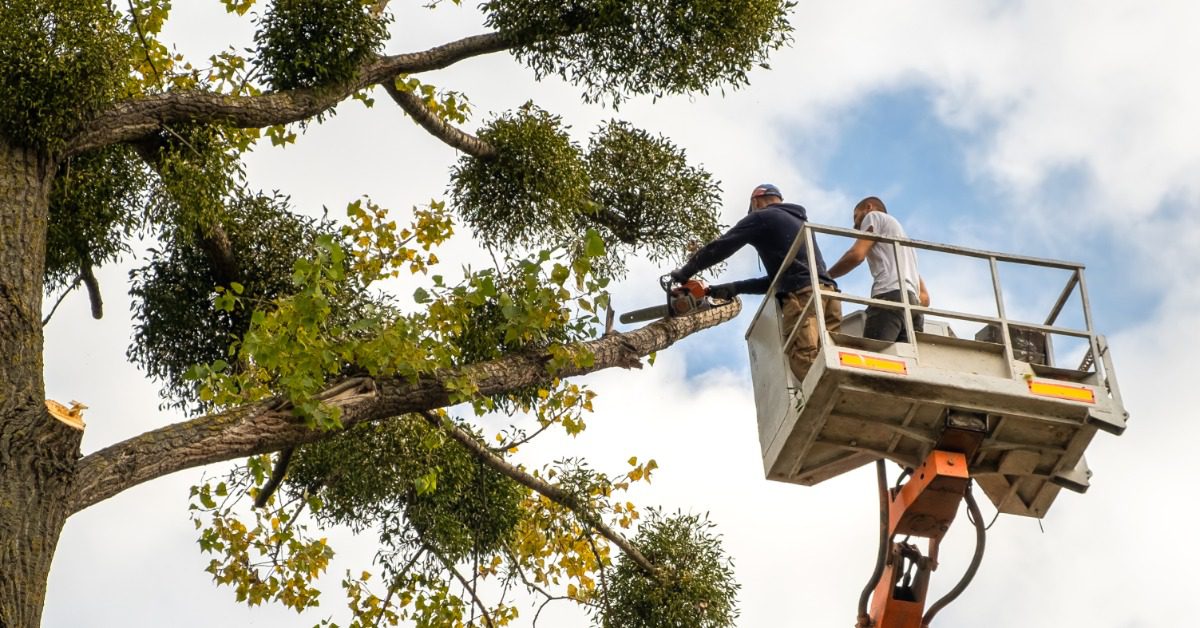
Modern arboriculture continues advancing through scientific research and field experience. Professional organizations consistently discourage topping because decades of evidence demonstrate its harmful effects. Certified arborists rely on practices that preserve tree health rather than sacrificing long-term stability for temporary convenience.
Proper pruning begins with understanding tree biology. Arborists evaluate growth patterns, branch structure, species characteristics, and future development before making any cuts. That careful planning allows each pruning decision to benefit the tree instead of weakening it.
At Great Plains Tree Care, our crews focus on aesthetic pruning techniques that support healthy, sustainable growth while considering customer goals and surrounding structures. We create customized pruning strategies that balance biological function and long-term safety for every tree we maintain.
Protect Your Trees With Proper Pruning Techniques
Healthy trees represent valuable long-term investments for your home and community. Proper pruning preserves that investment by encouraging strong structure, disease resistance, and natural beauty. Poor pruning decisions, especially topping, often create irreversible damage that shortens a tree’s lifespan and increases future maintenance costs.
Professional tree canopy thinning with Great Plains Tree Care improves canopy performance while preserving the biological systems that keep trees healthy. Every carefully selected pruning cut contributes to stronger growth, better airflow, and improved structural integrity without exposing the tree to unnecessary stress. Certified arborists understand how to achieve these results while maintaining the natural appearance of each species.
Let us help you with your property’s trees. Our professional arborists can explain why crown thinning and better than tree topping and which process will serve your legacy best.