

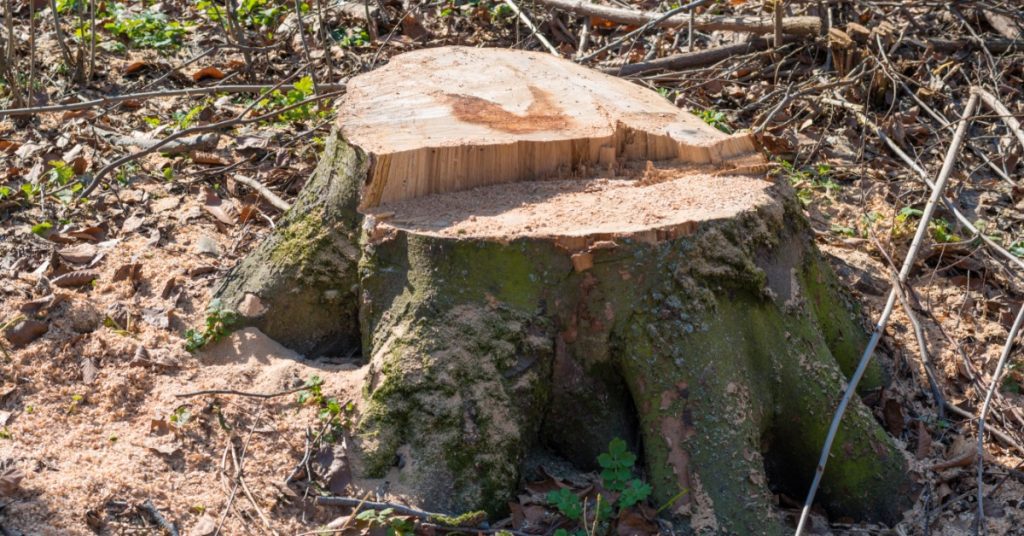
Removing an old tree can solve an immediate problem above ground while leaving a much larger structure hidden underneath the soil. Mature trees develop extensive root systems that once carried water, nutrients, and structural loads throughout the tree, and those roots don’t disappear when crews remove the trunk.
Over time, buried woody material starts to decay, changing the physical structure of the surrounding soil and sometimes creating spaces where solid roots once existed. These changes can eventually show up at the surface as depressions, soft spots, uneven grades, or small sinkhole-like areas that seem to appear without warning. Great Plains Tree Care explains more about how old tree roots create grade-level sinkholes and how our services can help.
What Happens to Roots After a Tree Comes Down
A living root system contains an organized network of woody tissue that supports the tree while moving water and nutrients through its structure. When crews remove the canopy and trunk, that underground network no longer functions as it did when the entire tree remained alive. Depending on the species and condition of the remaining tissue, some roots may persist for a period while other portions begin declining relatively quickly. Eventually, dead woody roots decompose as fungi, microorganisms, moisture, oxygen, and other environmental factors break down their organic material.
That decomposition happens underground, so property owners rarely see the progression directly. A large structural root can occupy significant space within the soil before decay gradually reduces it to softer organic material and eventually leaves far less solid volume behind. Soil surrounding the deteriorating root may initially hold its position because particles bridge the developing gap or nearby roots provide temporary support. Once this support weakens, gravity, water movement, foot traffic, mowing equipment, and ordinary soil settlement can cause the surface to drop.
How Root Decay Creates Underground Voids
Think about a large buried root as a structural object occupying a defined amount of space beneath your lawn. As microorganisms break down its cellulose, lignin, and other organic components, the root gradually loses density, rigidity, and physical volume. The surrounding soil doesn’t always move inward at exactly the same rate as the woody material disappears. That mismatch can create small gaps and weakened soil zones that expand or combine as decomposition continues.
Moreover, underground spaces rarely resemble the enormous geological sinkholes that make national news, so homeowners should keep the scale in perspective. In a residential landscape, root-related sinking more often produces localized depressions, narrow channels, soft areas, or sudden holes along the former root system. Large old roots can create more noticeable settlement because they occupied considerably more underground space than fine feeder roots. A mature tree with substantial structural roots may therefore leave a complicated subsurface footprint long after its removal.
Why Sinkholes Can Appear Years After Tree Removal
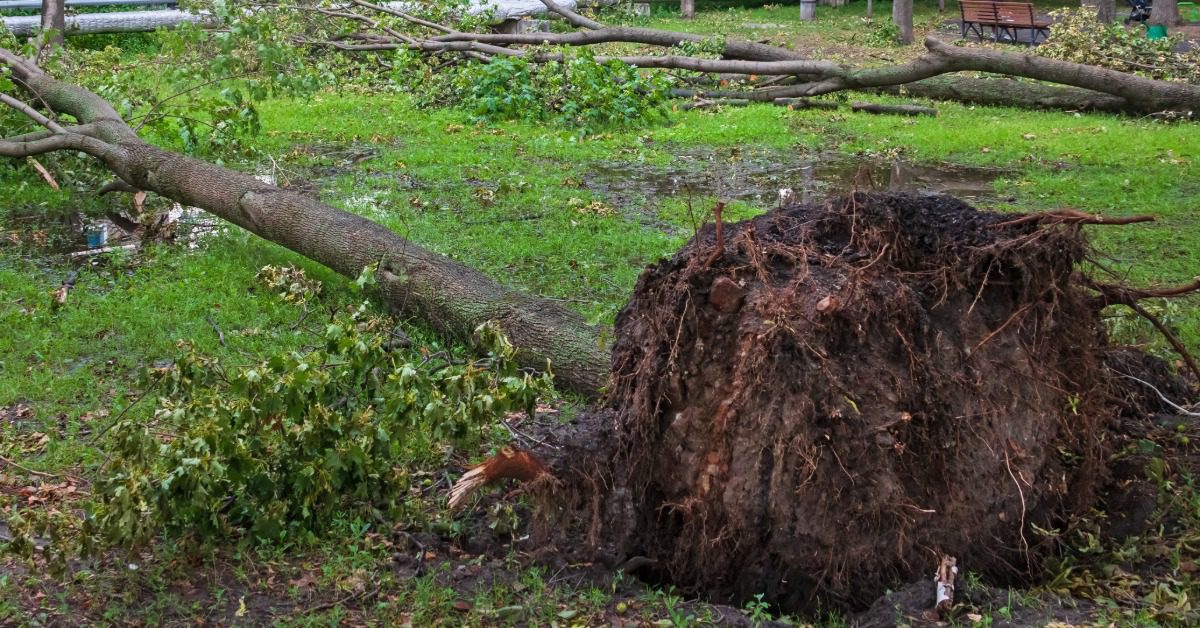
Homeowners sometimes assume that a yard problem cannot relate to an old tree because crews removed that tree several years earlier. Root decomposition explains why that assumption can lead them in the wrong direction, since thick woody roots can persist underground while slowly losing their structural integrity. Surface soil may remain relatively level during the early stages because partially intact roots continue occupying much of their original space. The visible depression often develops later, when decomposition reaches a point where the surrounding soil can no longer bridge or fill the weakening area.
Moisture can accelerate noticeable changes by moving loose soil particles into openings around decayed roots. Repeated wetting and drying can also change soil structure, while freeze-thaw cycles can contribute additional movement in Nebraska landscapes. Each small change may seem insignificant until enough material shifts downward to alter the grade at the surface. What looks like an overnight sinkhole may actually represent the final visible stage of an underground process that developed slowly.
Signs That Old Roots May Be Affecting Your Yard
Not every low spot comes from decaying tree roots, which makes careful observation important before anyone reaches a conclusion. Drainage problems, disturbed fill, utility work, animal activity, soil compaction, construction, and other conditions can also create settling or depressions. However, the location and shape of a problem can provide useful clues when the affected ground sits near a former tree or follows the path of old structural roots. Homeowners should pay particular attention when several related symptoms develop around the same area.
Common warning signs can include:
- A depression forming where a tree or stump previously stood
- Narrow sinking areas extending outward from the former trunk location
- Soil that feels unusually soft or hollow underfoot
- Small holes that repeatedly return after homeowners add topsoil
- Uneven turf growth along former root paths
- Water collecting in a depression that previously drained normally
- Ground movement near sidewalks, patios, edging, or other hardscape
- New low spots developing several years after tree removal
How Stumps and Major Roots Influence Future Settlement
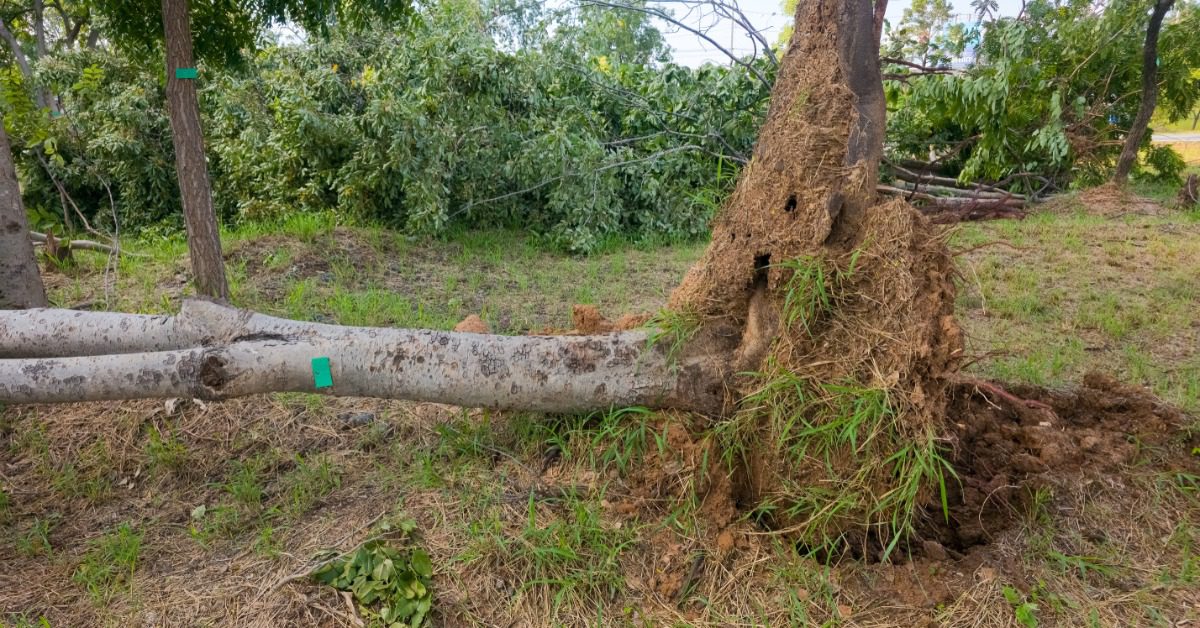
The stump represents only the most visible portion of the underground structure left after crews cut down a tree. Major roots radiate outward from that central area, which means future settlement doesn’t always remain confined to the exact location of the original trunk. Large roots may extend beneath lawn areas and toward nearby landscape features, creating several potential zones where decomposition can influence soil elevation. The size, species, health, age, and original root architecture of the tree can all affect what remains underground.
This hidden structure can also explain why stump removal in Omaha involves more than improving the appearance of a recently cleared yard. Removing or grinding appropriate woody material can reduce the amount of substantial material left to decay immediately around the former stump, although no normal stump project can make every fine root throughout a mature tree’s former root zone instantly disappear. An arborist can evaluate the site, the remaining stump structure, and practical removal options instead of making unrealistic promises about every underground root. This distinction matters when homeowners want a clean, usable landscape while also planning for future soil settlement.
Protecting Your Property After an Old Tree Comes Down
Great Plains Tree Care understands that old trees and their roots leave a legacy beneath the surface as well as above it. Our Nebraska-certified arborists work in delicate urban landscapes where tree condition, property protection, and long-term site management require careful attention. If an old stump, decaying root system, or unexplained depression has you wondering what is happening below your lawn, professional evaluation can clarify the next step. Contact Great Plains Tree Care to request a free estimate and discuss the tree-related conditions affecting your Omaha-area property.