

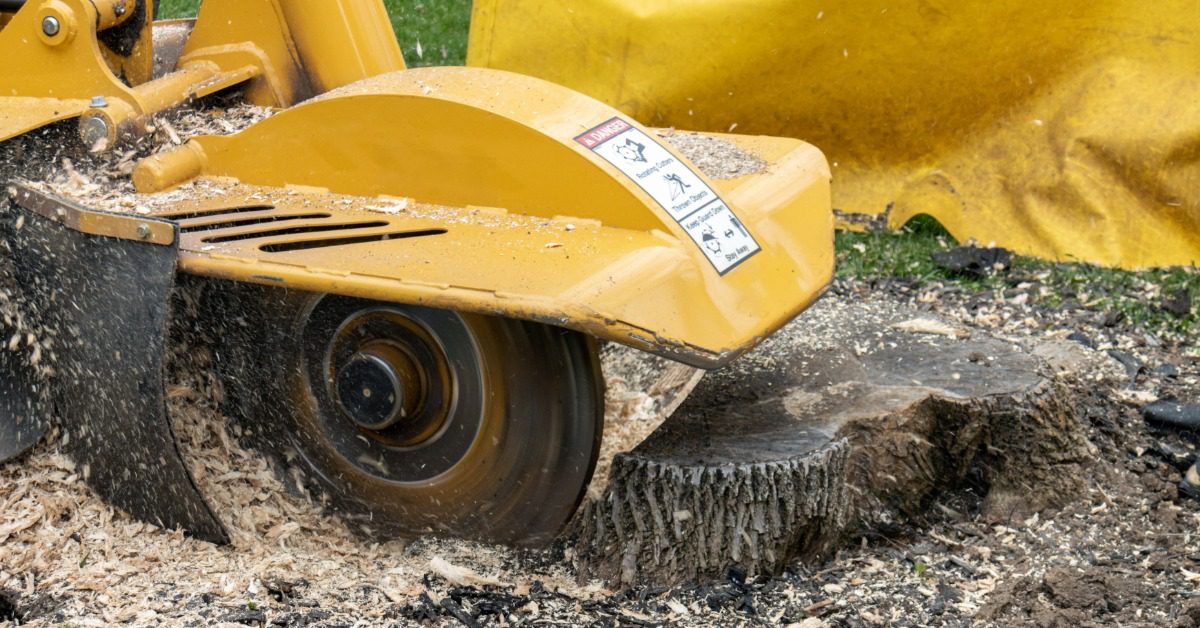
A tree stump often looks like a surface problem at first glance. Below it, however, buried service lines share the same soil as the roots you want gone. That overlap is what turns a routine grind into an emergency, and why the safest crews treat utilities as the first step, not an afterthought.
Stump grinders cut 6 to 18 inches below grade, which puts gas, water, electric, sewer, and communications lines at risk. Nebraska law requires calling 811 at least two business days before a stump grinding project begins. A locate crew marks public lines by color, and the 18-inch tolerance zone dictates how deep a professional can safely grind. Great Plains Tree Care discusses how underground utilities impact stump grinding, and the steps you must take beforehand.
Does Stump Grinding Require Calling 811 in Nebraska?
Grinding disturbs the soil, so it triggers the same locate requirement as any dig. Because of this, the following conditions apply:
- Nebraska Revised Statutes §§76-2301 to 76-2332 require anyone disturbing soil to place a locate request at least two full business days before work begins.
- The service is free by phone at 811 or online at nebraska811.com.
- The Metropolitan Utilities District (MUD) and the Omaha Public Power District (OPPD) participate in the Nebraska 811 system and dispatch locators to flag their lines.
- Great Plains Tree Care can file the 811 request on the homeowner’s behalf and wait out the notice period before touching the stump.
How Deep Do Stump Grinders Actually Go?
Most grinders remove wood 6 to 18 inches below grade, depending on how completely the root crown must clear.
Some jobs stop at 4 to 6 inches for a basic grind. Deeper passes are necessary if the ground needs to be replanted or paved and the crown can’t leave a hollow behind.
As such, depth is where conflict lives. Utility lines in older Omaha neighborhoods were often buried decades ago and may sit shallower than current code allows. The deeper the grind, the higher the odds of contacting a buried line.
What Utilities Does Nebraska 811 Cover and Not Cover?
811 marks public utilities up to the meter, but private lines are your responsibility.
- Covered by 811: Electric, gas, water, sewer, and communications lines owned by the utility
- Not covered by 811: Irrigation systems, invisible fence wire, secondary sewer laterals, and gas or electric lines running to a detached garage or shed
Homeowners must locate and mark these areas before a crew arrives. When a private line’s path is unknown, ground-penetrating radar and hand probing can supplement the 811 marks.
What Do the Colored Utility Flags in the Yard Mean?
Each flag color maps to one type of buried line, following the national and Nebraska 811 standard. Homeowners may see some or all of the following colors:
- Red: Electric power lines, conduit, and cable
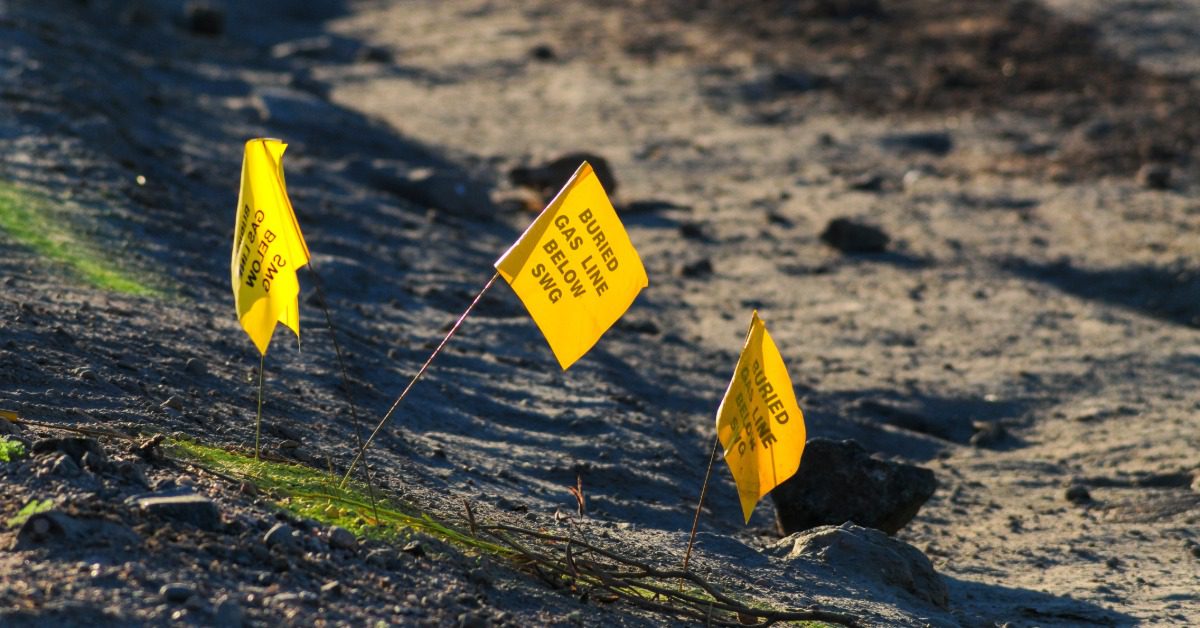
- Yellow: Gas, oil, steam, and petroleum
- Blue: Potable water
- Green: Sewer and drain lines
- Orange: Communications, alarm, cable TV, and fiber
- White: The outline of the planned dig area
What Is a Utility Tolerance Zone, and How Does It Affect Grinding Depth?
In Nebraska, the tolerance zone extends 18 inches on either side of a marked line, and mechanical grinding can’t run freely inside it. Within the buffer, hand digging and extreme caution replace the machine.
If a stump sits inside the zone, a professional shallow-grinds that section, exposes the root zone by hand, or uses controlled side-to-side passes to stay clear of the line. When a stump sits directly over a marked line, the crew may grind only partway and apply a chemical treatment to kill the remaining wood safely.
What Happens if a Stump Grinder Hits a Gas or Water Line?
A strike escalates fast, from property damage to a neighborhood-wide hazard. Be on the lookout for the following red flags:
- A struck gas line can leak or ignite, forcing evacuation and an emergency utility response.
- A cut water main floods the site and interrupts service.
- A severed fiber line can knock out phone, internet, and alarm systems for the whole block.
Professionals watch for abnormal vibration or resistance and stop the moment the machine behaves unexpectedly. Grinding near a marked gas line is possible, but it demands shallow passes, hand exposure of roots, and a stop-and-check rhythm.
Who Is Liable if a Contractor Damages an Underground Utility?
Liability falls on whoever broke ground without a valid locate request. A homeowner who grinds without calling 811 owns the repair bill and any service-restoration costs. Hiring a licensed, insured Omaha crew that files the 811 request shifts that exposure to the professional’s process and coverage.
Moreover, the liability gap is the clearest reason to skip the DIY rental for any stump near a known utility corridor. One misjudged pass can cost more than the tree ever added to the property.
What Should Omaha Homeowners Do Before a Grinding Crew Arrives?
Homeowners should handle the private lines and access that a crew can’t manage from a locate ticket. This might include the following action items:
- Confirm the 811 locate is complete and the flags are in place.
- Locate and mark private lines yourself, such as irrigation, invisible fence, low-voltage lighting, and lines to outbuildings.
- Outline the work area with white paint or flags so that locators and the crew know the exact dig zone.
- Clear gate access wide enough for the grinder, and move patio furniture, vehicles, and other obstacles off the path.
For a full breakdown of the removal process, see our Omaha stump removal resources and schedule an appointment for a free professional estimate. We can explain more about how your underground utilities may impact stump grinding as it pertains to your property.
FAQ
Can a stump be ground if it’s right next to a marked utility line?
Yes, but the approach changes. Inside the 18-inch tolerance zone, a professional shallow-grinds, exposes roots by hand, or uses controlled passes. When the stump sits directly over a line, partial grinding plus chemical treatment can finish the job safely.
Is it safe to grind a stump near a gas line?
It can be, with the right precautions. A professional keeps passes shallow, hand-exposes roots near the mark, and stops at any abnormal vibration. Full-depth grinding blind over a gas line is never safe.
What private lines should I mark before the crew arrives?
Mark anything that 811 won’t cover, such as irrigation systems, invisible fence wire, low-voltage lighting and gas, and water or electric lines running to a detached garage, shed, or pool. Mark them yourself or have them privately located.
Who pays if a stump grinder hits a utility line?
Whoever disturbed the soil without a valid locate. A homeowner grinding without calling 811 is on the hook for repairs and service costs. Hiring an insured crew that files the locate shifts that risk to the professional.