

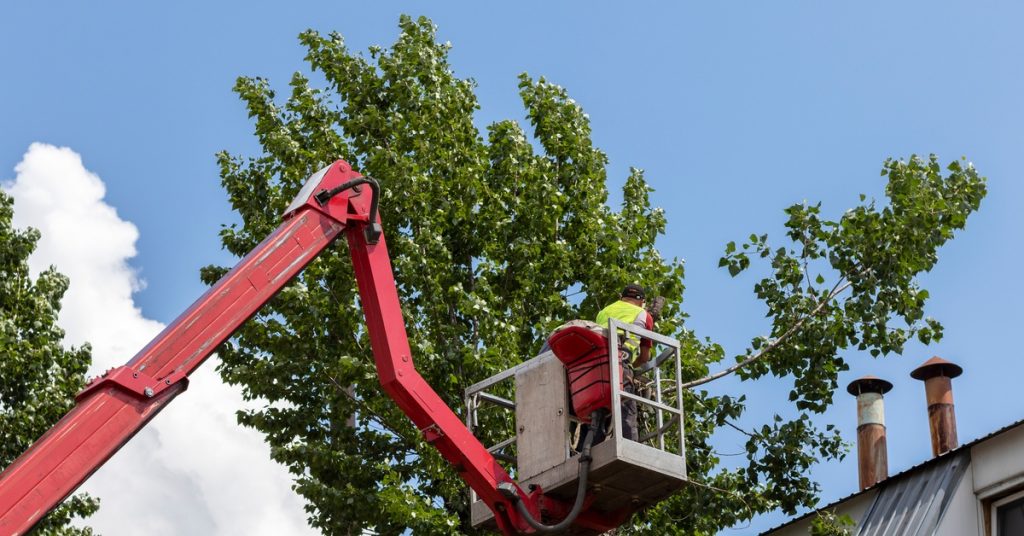
Tree removal requires more than powerful equipment and experienced crews. Every successful crane-assisted removal depends on advanced rigging techniques that control movement, protect nearby structures, and keep workers safe throughout every stage of the project. Professional arborists calculate loads, select proper rigging equipment, and coordinate every lift before making the first cut.
At Great Plains Tree Care, we specialize in complex urban tree removals that demand precision and planning. Our Nebraska-certified arborists use specialized equipment and proven rigging methods to remove hazardous trees safely in delicate residential neighborhoods and commercial properties throughout the Greater Omaha area. We provide dependable solutions that protect valuable landscapes while completing projects efficiently. We’re discussing several advanced rigging techniques for crane tree removal to shed light on what you can expect.
Why Advanced Rigging Matters During Crane Tree Removal
Many mature trees grow close to homes, garages, fences, power lines, and landscaped areas. Traditional felling methods often create unnecessary risks because large sections have limited space to fall safely. Crane-assisted removals eliminate most of the uncertainty by lifting sections directly away from surrounding obstacles.
Rigging is the connection between the tree and the crane. Every sling, shackle, pulley, and rope must work together to keep the load stable throughout the lift. Skilled arborists choose each component based on the size, weight, wood condition, and balance of every section they remove.
Understanding the Physics Behind Safe Rigging
Advanced rigging begins with understanding how weight behaves during lifting operations. Tree sections rarely have perfectly balanced centers of gravity because branches, cavities, decay, and uneven trunks shift weight unexpectedly. Arborists carefully evaluate these variables before making each cut.
Lift calculations also consider leverage and dynamic loading. A log that weighs 2,000 pounds while stationary may generate significantly greater force once it begins moving. Experienced crews account for those additional forces when selecting rigging equipment and crane capacity.
Drop zone calculations also play a critical role in planning. Even though cranes lift most sections directly upward, crews establish protected landing areas in case unexpected movement occurs. These safety zones reduce the chance of equipment damage or worker injury during complex removals.
Structural Lift Limits Guide Every Decision
Professional arborists never guess when determining lift capacity. Every crane comes with detailed load charts that establish safe working limits based on boom angle, extension, and operating radius. Operators reference these charts before every lift.
Rigging hardware also includes manufacturer-rated working load limits. Slings, shackles, hooks, pulleys, and synthetic ropes each have maximum capacities that crews must never exceed. Matching these ratings creates multiple layers of safety throughout the removal process.
Choose the Right Rigging Equipment
Every tree presents unique challenges that require different rigging configurations. Professional crews carry specialized equipment that adapts to changing conditions throughout the project.
Common rigging equipment includes:
- Polyester lifting slings for heavy trunk sections.
- Wire rope chokers for large hardwood removals.
- High-strength shackles with certified load ratings.
- Friction devices that control lowering speed.
- Rigging blocks that redirect lifting forces.
- Synthetic ropes with high tensile strength.
- Protective padding that prevents bark damage on preserved trees.
Plan Lift Sequences Before Cutting Begins
Successful crane removals begin long before chainsaws start running. Arborists perform site evaluations to determine crane placement, access routes, overhead hazards, underground utilities, and surrounding structures. This planning phase helps crews anticipate challenges before they become problems.
Lift sequencing determines the order in which tree sections leave the canopy. Removing weight unevenly can shift the tree’s center of gravity and create dangerous instability. Professional crews plan each cut carefully so that the remaining tree stays balanced throughout the operation.
Precision Cutting Supports Controlled Lifts
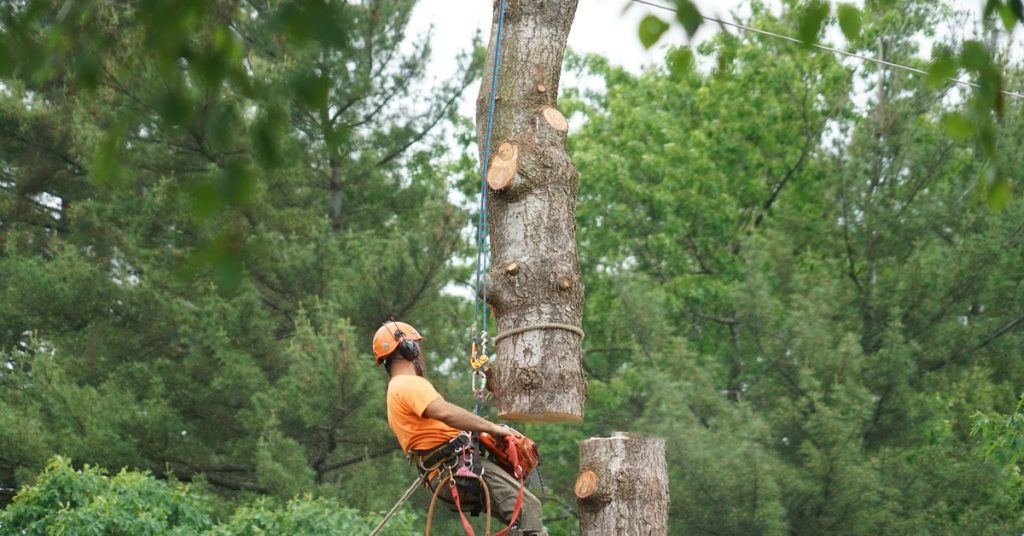
Rigging alone cannot produce safe crane removals. Arborists must make accurate cuts that separate tree sections cleanly while allowing the crane to assume the load gradually. Timing plays an important role during every lift.
The climber communicates continuously with the crane operator while applying slight lifting pressure before completing the final cut. This coordination prevents sudden shock loading that could damage equipment or destabilize the remaining tree.
Manage Challenging Urban Tree Removals
Urban environments create obstacles that demand advanced rigging strategies. Houses, swimming pools, sidewalks, retaining walls, utility lines, and neighboring trees leave little room for error. Crane removals often provide the safest solution when conventional methods become impractical.
Professional arborists adjust rigging configurations to accommodate confined workspaces. Shorter lift sections may reduce swinging forces while allowing better control near sensitive structures. Multiple attachment points can also improve stability when removing irregularly shaped canopy sections.
Experience Makes Advanced Rigging Successful
Modern equipment provides impressive lifting capabilities, but experience determines how effectively crews use those tools. Certified arborists recognize warning signs that less experienced operators may overlook. Years of field experience help crews adapt quickly when tree conditions change unexpectedly.
Training also plays an important role in successful crane removals. Arborists continually study new rigging methods, updated safety standards, and improved lifting technologies. This ongoing education allows professional crews to complete increasingly complex removals with greater precision.
Great Plains Tree Care combines experienced arborists with specialized machinery designed for efficient urban tree work. Our team emphasizes safety, careful planning, and attention to detail on every residential and commercial project. These values have helped us earn the trust of property owners throughout our service area.
When Crane Removal Becomes the Best Option
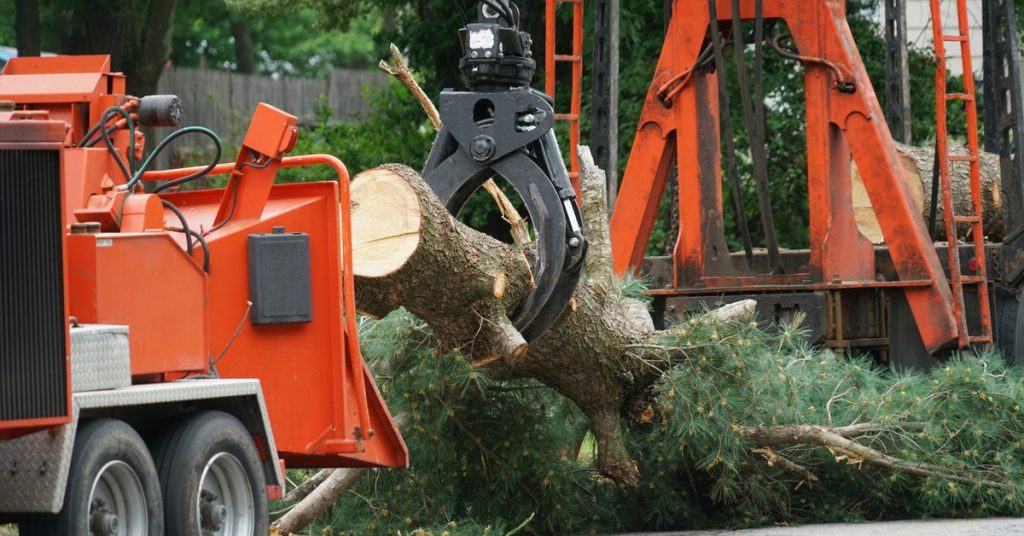
Not every tree requires crane removal, but certain situations strongly benefit from advanced rigging techniques. Large, hazardous trees often become unstable because of storm damage, disease, or structural defects. Removing these trees piece by piece reduces unnecessary risk.
Crane-assisted removal also proves valuable when access remains limited. Narrow side yards, steep slopes, retaining walls, and landscaped properties often prevent conventional equipment from reaching the work area safely. Cranes allow crews to lift sections directly over obstacles instead of dropping them into confined spaces.
Property owners seeking tree removal services in Omaha, Nebraska, should choose certified professionals who understand advanced rigging principles and maintain properly rated equipment. Complex removals demand technical knowledge that extends well beyond basic chainsaw operation.
Protecting Property Through Professional Planning
Every successful crane tree removal reflects careful preparation rather than luck. Professional arborists inspect tree health, evaluate structural integrity, calculate lift weights, and establish clear communication before beginning work. These preparations reduce risk while protecting nearby homes, vehicles, and landscapes.
Environmental responsibility also remains part of professional tree care. Modern equipment, well-maintained machinery, and environmentally conscious operating practices minimize the impact on surrounding landscapes during removal projects. Great Plains Tree Care also remains fully licensed, fully insured, and committed to delivering safe, detail-oriented service throughout the Omaha region. Get a free estimate today for tree removal.