

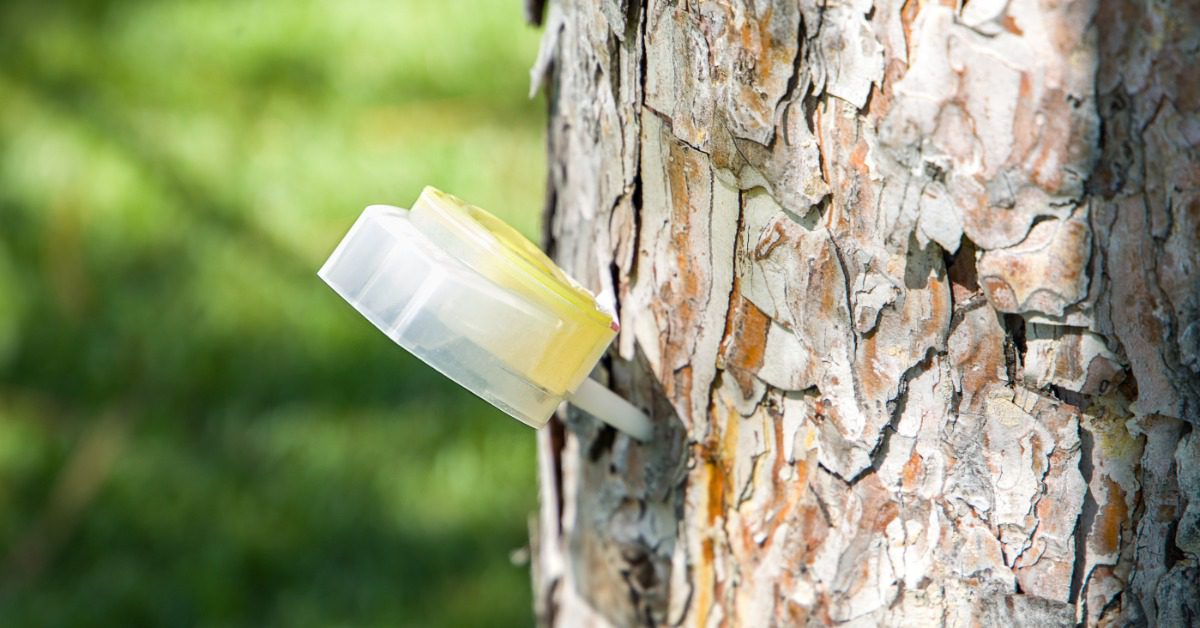
Macro-infusion and micro-injection move treatment materials into a tree through its vascular system, but they don’t approach delivery in the same way. Arborists choose between these methods by considering the tree’s size, condition, treatment objective, product requirements, and ability to move fluid through living tissue. The amount of solution matters, but so does the rate at which the tree can accept and distribute that solution through its vascular pathways.
Understanding these differences helps property owners see why professional injection work requires more than simply drilling a port and adding a product. Great Plains Tree Care is comparing macro-infusion vs. micro-injections to help you make the right decision for your property.
What Is Macro-Infusion?
Macro-infusion introduces a relatively large volume of diluted treatment solution into a tree’s vascular system over a controlled period. The method gives an arborist a way to distribute material through a substantial portion of the canopy when the tree can actively take up and move the solution. Because the process involves more fluid, tree size, vascular activity, environmental conditions, and treatment formulation all influence how efficiently the tree accepts the application. Arborists must watch the process rather than assume that a larger volume will automatically produce a better result.
The tree itself ultimately controls much of the intake rate because its vascular system must move the solution upward with the transpiration stream. Warmth, soil moisture, canopy activity, species characteristics, and existing stress can all affect how quickly that movement occurs. A healthy, actively transpiring tree may accept solution differently from a severely stressed tree with compromised conductive tissue. This difference makes fluid dynamics an important part of every macro-infusion decision.
What Are Micro-Injections?
Micro-injections deliver smaller, concentrated doses directly into the vascular system at carefully selected trunk locations. Instead of relying on a large reservoir of diluted solution, this method places measured amounts close to the conductive tissue that transports water and dissolved materials through the tree. Arborists can use this controlled delivery approach when the treatment product, tree condition, and target problem support a lower-volume application. The smaller dose doesn’t mean the treatment lacks strength, because concentration and product chemistry matter as much as total fluid volume.
Precision plays a major role in micro-injection work, especially when an arborist determines dosage from trunk measurements and product directions. Correct placement helps the tree access the treatment while limiting unnecessary disruption to trunk tissue. An arborist also needs to account for how quickly the tree accepts the material and whether the application sites show consistent uptake. Careful observation can reveal whether the tree’s physiology supports the planned treatment strategy.
Comparing Fluid Volume and Tree Tissue Intake
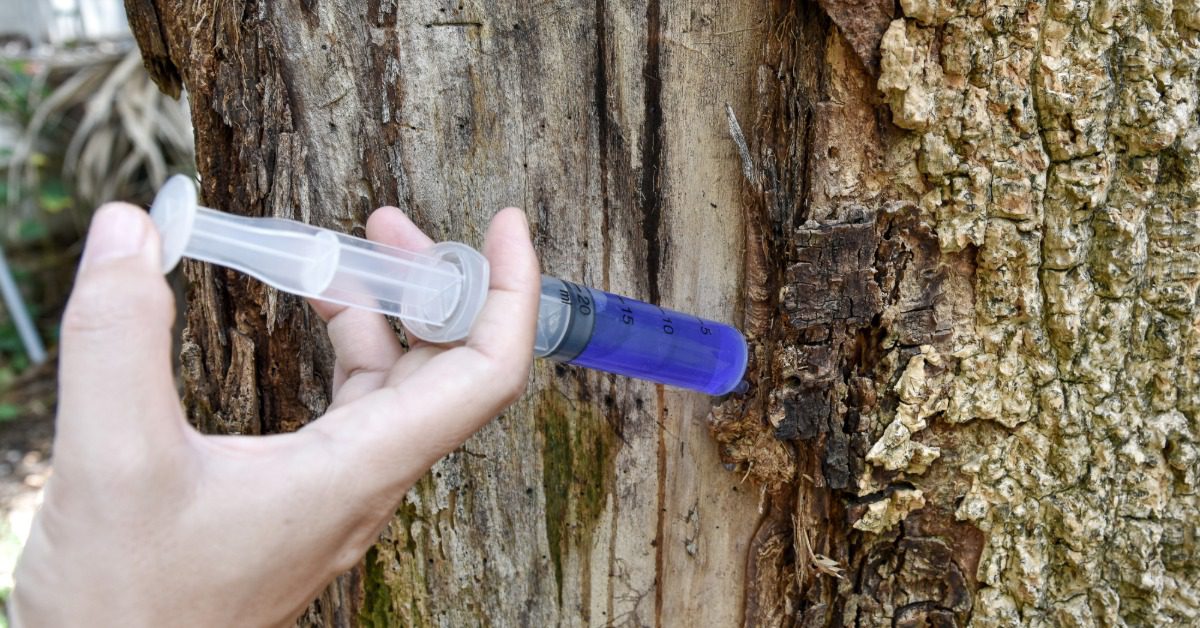
The clearest difference between macro-infusion and micro-injection involves the amount of carrier solution that enters the tree. Macro-infusion generally depends on more fluid to carry treatment material through the vascular system, while micro-injection relies on smaller volumes with more concentrated formulations. This contrast changes equipment needs, application time, monitoring requirements, and the way an arborist evaluates uptake. It also explains why the same tree may not respond equally well to both methods.
Intake velocity deserves just as much attention as total volume because a tree can only move solution at the rate its functioning tissues allow. Forcing fluid faster than the tree can accept it doesn’t improve biological transport and can complicate the application process. Experienced arborists instead work with the tree’s natural movement of water through xylem tissue and adjust the treatment process accordingly. The goal involves effective distribution through living tissue, not simply emptying a container as quickly as possible.
Why Timing Changes Injection Performance
Timing affects macro-infusion and micro-injection because vascular activity changes with weather, moisture availability, seasonal growth, and tree stress. A tree that actively moves water through its tissues can distribute an injected material differently from a tree experiencing limited transpiration. Application timing therefore influences intake speed as well as movement toward branches, foliage, and other target tissues. Our expert arborists consider these conditions before choosing when and how to apply treatment.
Timing factors become especially important when property owners wait until visible decline grows severe. Earlier diagnosis often leaves more functioning tissue available for treatment and gives an arborist more options for protecting tree health. Waiting can narrow these options when insects, disease, drought stress, or vascular damage continue to weaken the tree. Prompt evaluation supports a more informed tree disease treatment plan without assuming that every declining tree needs the same product or delivery method.
Macro-Infusion vs. Micro-Injection: Practical Differences
Property owners rarely need to calculate injection pressure or fluid movement themselves, but understanding the basic comparison makes professional recommendations easier to evaluate. Each method balances treatment volume, concentration, application time, equipment, and tree physiology in a different way. The right choice should reflect the target problem and the tree’s ability to move the treatment through its vascular system. These practical distinctions show why injection work benefits from diagnosis before application.
- Solution volume: Macro-infusion uses a larger carrier volume, while micro-injection uses smaller concentrated doses.
- Application approach: Macro-infusion moves diluted solution through a larger delivery setup, while micro-injection places measured material at specific trunk sites.
- Uptake monitoring: Both methods require attention to how readily living vascular tissue accepts and transports the treatment.
- Tree condition: Canopy activity, vascular health, species, size, and stress can influence the appropriate method.
- Treatment objective: Pest control, disease management, or micronutrient support may call for different products and delivery strategies.
- Professional judgment: Diagnosis and product requirements should guide the method rather than a one-size-fits-all preference.
Why Great Plains Tree Care Prefers Systemic Delivery
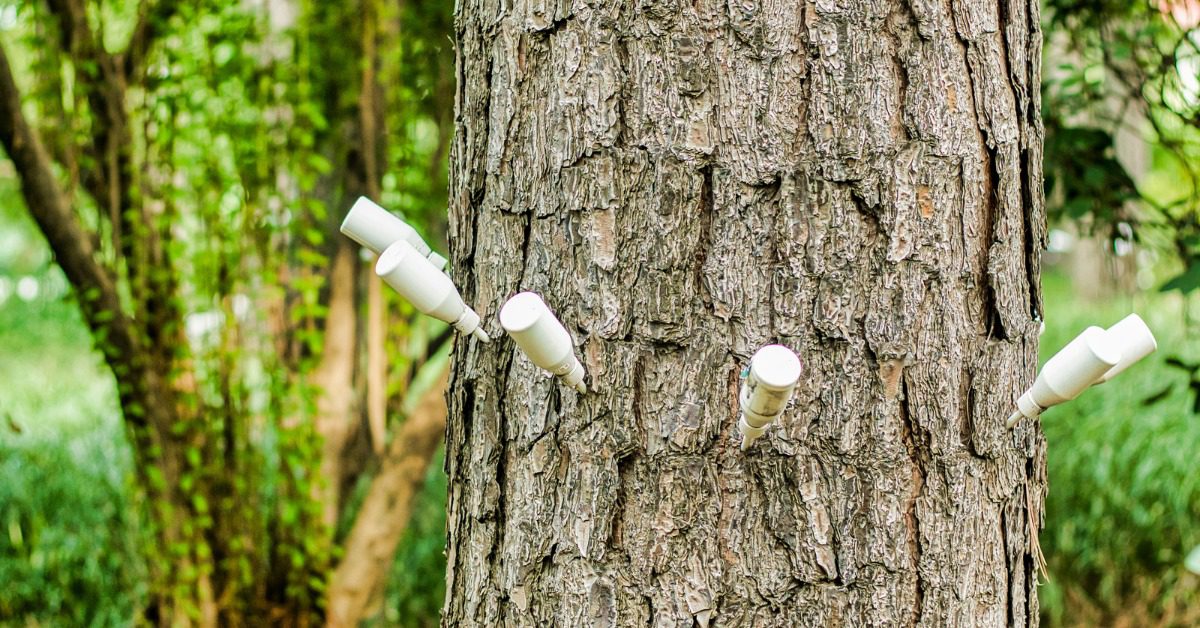
Great Plains Tree Care often prefers injection methods over broad canopy spraying because systemic delivery sends the selected solution directly into the tree’s vascular system. This approach can reduce exterior exposure because the treatment moves inside the tree rather than across leaves, bark surfaces, lawns, or nearby property. This characteristic can matter to households with children or pets when the specific treatment supports an injection-based application. We also consider deep-root soil injection for certain situations when tree needs and treatment options make that approach appropriate.
Systemic applications can support programs involving insecticides, fungicides, and micronutrients when diagnosis and product directions support their use. Great Plains Tree Care also treats well-known concerns, such as Emerald Ash Borer and Pine Wilt, with preventative strategies when the tree and timing make intervention appropriate. The company employs Nebraska-certified arborists and licensed chemical applicators, which supports careful evaluation of treatment options for valuable trees.
Protecting the Legacy of Your Trees
Great Plains Tree Care helps Omaha-area homeowners, property managers, and commercial clients evaluate trees before choosing a treatment program. Our team can explain whether injection, soil-based application, another preservation strategy, or a different course of action fits the condition of the tree. We focus on giving you the diagnosis and cost information needed to make an informed decision about trees that may have taken decades to mature. Contact Great Plains Tree Care for a free consultation and estimate when you want to explore systemic treatment options for valuable trees on your property.