

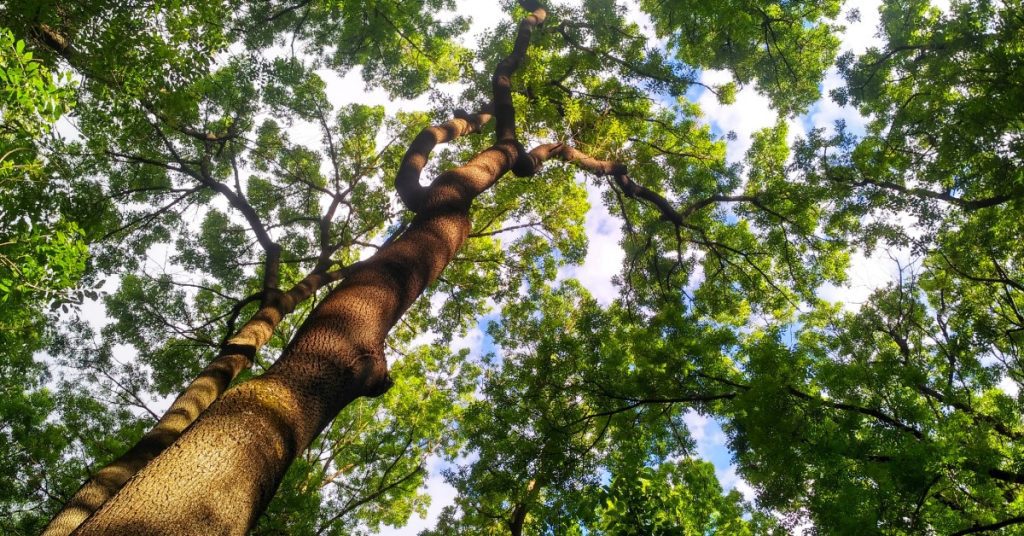
Ash trees have shaped neighborhoods throughout Omaha for generations by providing shade, beauty, and property value. Unfortunately, the Emerald Ash Borer has become one of the most destructive, invasive insects to threaten these valuable trees. Early identification gives homeowners the best opportunity to protect healthy trees before irreversible damage occurs. Recognizing the warning signs helps you determine when treatment can save a tree and when removal becomes the safest option.
The Emerald Ash Borer attacks only ash trees, but its impact spreads quickly through neighborhoods when infestations remain untreated. Adult beetles lay eggs beneath loose bark, and newly hatched larvae tunnel through the tree’s vascular system. Those tunnels interrupt the movement of water and nutrients throughout the tree. As the infestation grows, the tree weakens, becomes brittle, and eventually creates a serious safety hazard for nearby people and property. Great Plains Tree Care teaches you how to identify Emerald Ash Borer beetle damage, giving you the advantage you need to fight back.
At a Glance: The Emerald Ash Borer Life Cycle
The Emerald Ash Borer completes most of its life cycle beneath the bark where homeowners rarely notice its activity. Adult beetles emerge during late spring and early summer before laying eggs inside bark crevices. After the eggs hatch, larvae begin feeding immediately on the living tissue beneath the bark. Their feeding creates extensive damage long before obvious symptoms appear in the canopy.
The larvae create winding galleries that disrupt the tree’s internal transportation system. Healthy trees move water and nutrients through these tissues every day to support leaves, branches, and roots. As more larvae feed beneath the bark, the tree loses its ability to transport those essential resources. Decline accelerates each season unless professional treatment interrupts the infestation.
Look for D-Shaped Exit Holes
One of the most recognizable signs of Emerald Ash Borer activity involves small D-shaped exit holes on the trunk or major branches. Adult beetles create these openings when they emerge from beneath the bark after completing development. Each exit hole measures approximately one-eighth of an inch wide, making careful inspection necessary. Their unique shape separates Emerald Ash Borer damage from other common tree pests.
Homeowners often overlook these tiny openings because rough bark hides them easily. Inspect the trunk carefully from ground level upward whenever you suspect declining ash trees. Concentrate on areas where bark remains intact but shows subtle cracking or discoloration. Finding several D-shaped exit holes strongly suggests active Emerald Ash Borer activity.
Watch for Bark Splitting and Hidden Galleries
As larvae continue feeding beneath the bark, the tree begins reacting to internal damage. Vertical bark splits often develop because the growing tree attempts to seal damaged tissue. These cracks expose the winding galleries that larvae carve beneath the surface. Those distinctive S-shaped tunnels remain one of the strongest indicators of infestation.
Removing loose bark from suspected areas often reveals those galleries clearly. Healthy bark should remain firmly attached to the trunk without separating easily. Extensive bark splitting combined with visible galleries usually indicates that larvae have remained active for an extended period. Our professional arborists use these symptoms when evaluating whether treatment still offers a reasonable chance of success.
Notice Changes in the Tree Canopy
The canopy frequently provides the first visible clue that something has gone wrong. Leaves become smaller than normal and appear only near branch tips as the infestation progresses. Upper branches usually decline first because water movement decreases throughout the tree. Eventually, entire limbs lose foliage and die back completely.
Canopy thinning rarely develops overnight, so homeowners sometimes dismiss gradual changes as seasonal variation. Comparing photographs from previous years often reveals significant canopy loss that occurred slowly over time. A healthy ash tree should display full, vigorous foliage throughout the growing season. Sparse leaves and widespread branch dieback deserve immediate professional evaluation.
Woodpecker Activity Can Reveal Hidden Infestations
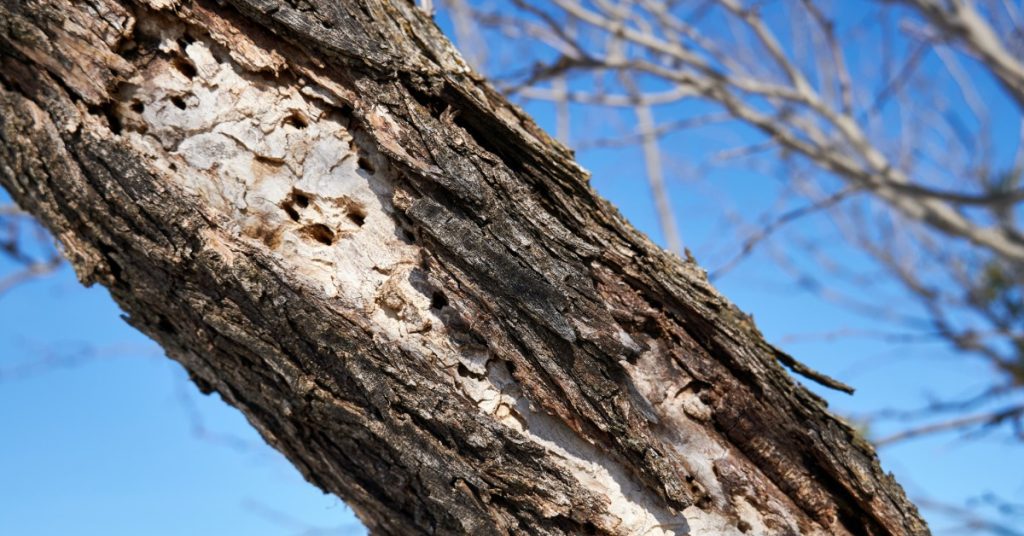
Woodpeckers often discover Emerald Ash Borer larvae before homeowners recognize visible symptoms. These birds remove sections of bark while searching for insects beneath the surface. Heavy woodpecker feeding leaves lighter-colored patches scattered across the trunk and larger branches. Those feeding sites frequently indicate active larval populations below.
Increased bird activity alone doesn’t confirm an infestation, but it provides an important clue during inspections. Combine this observation with canopy decline, bark splitting, or exit holes for a more complete picture. Arborists consider all visible symptoms together before recommending treatment or removal. Accurate diagnosis always produces better long-term decisions.
Look for Sprouts Growing Along the Trunk
Ash trees frequently respond to severe stress by producing new shoots from the trunk or lower branches. Arborists call these growths epicormic sprouts because dormant buds suddenly activate after the canopy loses vigor. The tree attempts to replace declining foliage by producing new leaves closer to the remaining healthy tissue. This emergency response signals significant internal stress.
These sprouts rarely solve the underlying problem because Emerald Ash Borer larvae continue damaging the vascular system. Homeowners should view excessive trunk sprouting as a warning sign instead of healthy new growth. Prompt evaluation may still identify treatment opportunities if enough living tissue remains. Delaying action usually reduces those options significantly.
Red Flags Homeowners Should Never Ignore
Several symptoms appear together as Emerald Ash Borer beetle damage progresses through an ash tree. Recognizing these signs early improves the chances of preserving valuable landscape trees. Schedule an inspection whenever you notice multiple warning signs at the same time. Early action almost always produces better outcomes than waiting another growing season. Keep this red flag checklist top of mind:
- D-shaped exit holes measuring about one-eighth inch wide.
- Vertical bark splits exposing S-shaped galleries.
- Thinning canopy beginning near the top of the tree.
- Dead branches throughout the crown.
- Excessive woodpecker feeding activity.
- Epicormic sprouts along the trunk.
- Smaller or fewer leaves than previous years.
- Brittle limbs that break more easily.
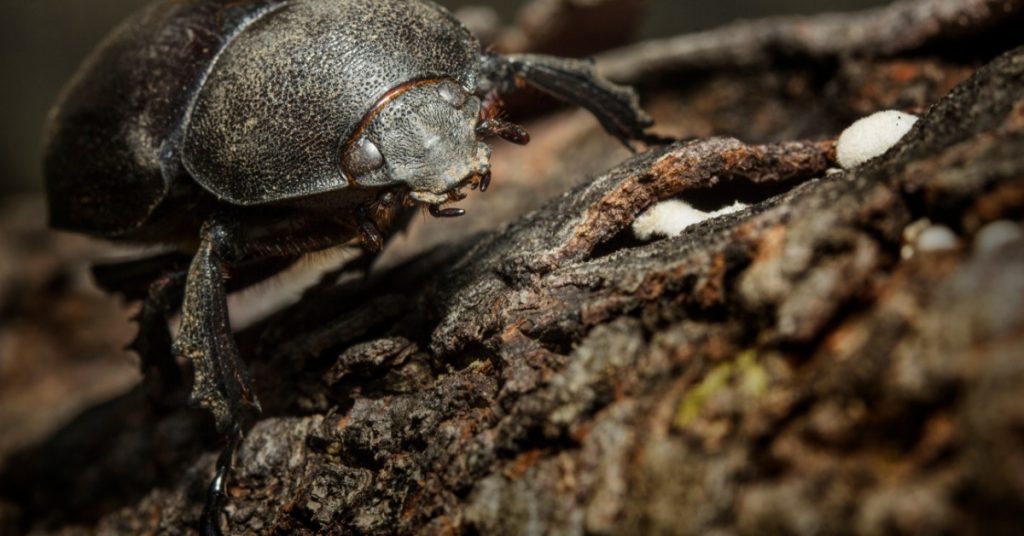
Many homeowners mistake these symptoms for normal aging or Ash Tree disease, but Emerald Ash Borer damage follows a very specific pattern. Certified arborists understand those patterns and perform detailed inspections before recommending treatment. Accurate diagnosis protects your investment and your property’s safety.
Great Plains Tree Care studies the industry’s most advanced tree safety techniques and provides professional service backed by certification, licensing, and insurance. Our experienced arborists offer free estimates while helping Omaha-area property owners make informed decisions about Emerald Ash Borer infestations. Whether your ash tree qualifies for trunk injection treatment or requires safe removal, our team delivers dependable workmanship focused on protecting your landscape for years to come. Contact Great Plains Tree Care today to schedule a professional inspection before Emerald Ash Borer damage spreads beyond repair.