

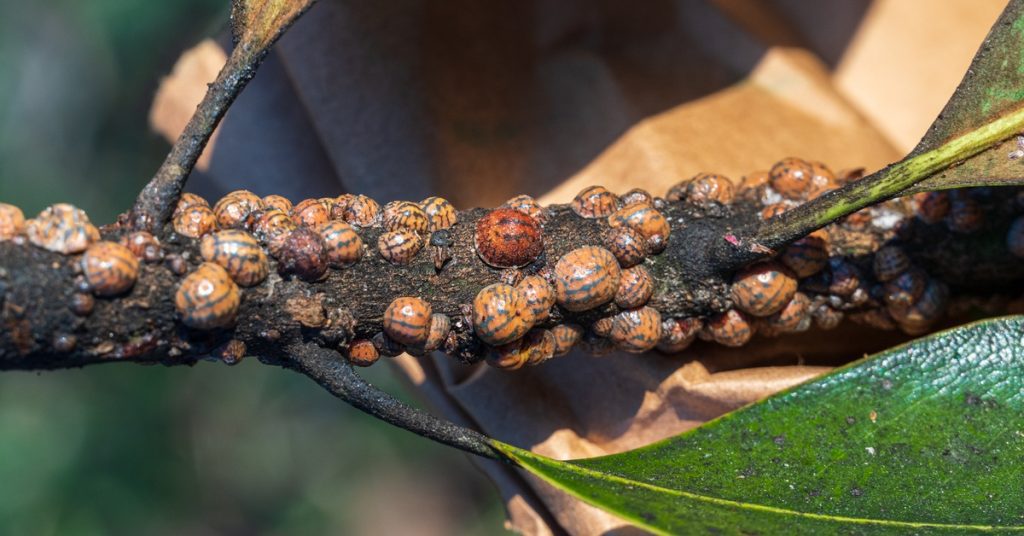
Deep-root tree injections stop scale insects by delivering systemic insecticide directly into a tree’s xylem, where sap carries it to every leaf, branch, and root. When scale pierce the tissue to feed, they ingest the chemical and die, regardless of how thick their protective shell is. Just one treatment can last up to three years.
These injections are successful because scale insects can survive the sprays most people reach for first. Below is a breakdown of how injections work, why they outperform contact treatments, and how to protect the mature trees that carry your property’s legacy.
What Are Scale Insects, and How Do They Damage Trees?
Scale insects are sap-sucking pests that latch on to bark, twigs, and leaves, then drain the fluids a tree needs to grow. Common Midwest species include oystershell, pine needle, cottony maple, and lecanium scale. Each type pierces plant tissue and feeds continuously, and the damage compounds.
Some noticeable damage often includes:
- Yellowing leaves and premature leaf drop
- Branch dieback and stunted new growth
- Sticky honeydew coating bark and leaves
- Black sooty mold feeding on that honeydew
If left unchecked, a heavy infestation weakens and eventually kills a mature tree over several seasons. A century-old oak or maple represents decades of growth no nursery sapling can replace, which is why catching scale early protects far more than a single season.
How Do Tree Injections Kill Scale Insects?
Deep-root tree injections control scale insects by delivering a systemic insecticide directly into the tree’s vascular system, where it is absorbed throughout the tissue and ingested by feeding pests.
One of our professional arborists injects the chemical directly into the trunk or root zone. The tree’s own sap flow then moves it through the xylem into branches, leaves, and roots. When scale insert their needle-like mouths into the plant tissues, they swallow the insecticide and die.
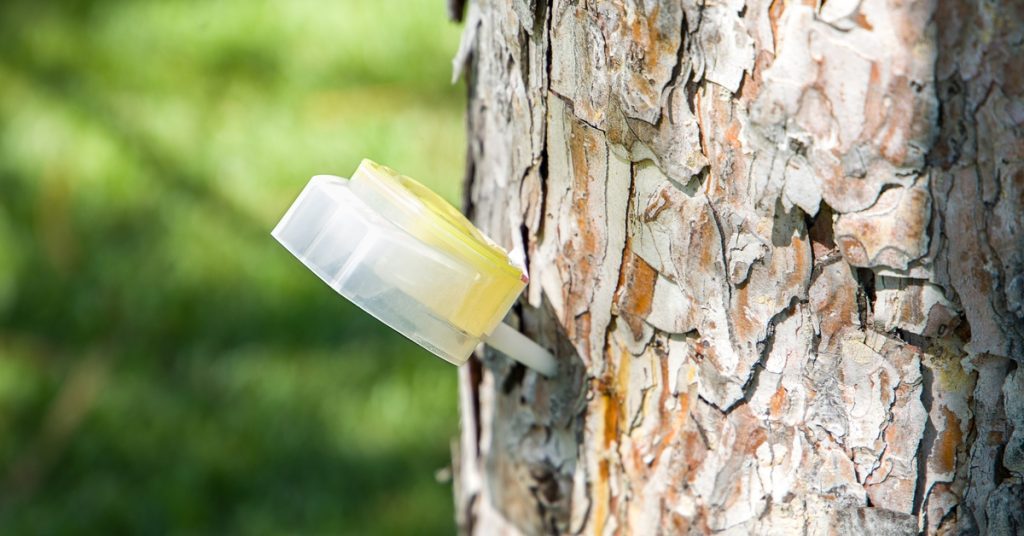
Active ingredients include imidacloprid, dinotefuran, emamectin benzoate, and abamectin. Because the pest is poisoned from the inside, its waxy or armored shell (the barrier that defeats sprays) offers no defense.
What Is the Difference Between Hard and Soft Scale?
Hard and soft scale differ in body structure and honeydew output, and they respond to different active ingredients. Hard and soft scale present the following characteristics:
- Hard (armored) scale: This group includes oystershell, pine needle, and San Jose varieties. They build a detachable waxy shell and produce little to no honeydew. They often appear as crusty bumps on bark.
- Soft scale: Cottony maple and lecanium are two varieties of this scale. Their softer bodies are fused to the shells and secrete heavy honeydew, which feeds sooty mold.
Because the two groups need different products, correct identification drives the treatment choice. Misidentifying the type leads to failed injections, which is a primary reason professional pest ID matters.
How Does a Deep-Root Injection Differ From a Trunk Injection?
A deep-root injection delivers insecticide into the soil root zone, while a trunk injection infuses it straight into the vascular tissue. Below are details on how the two injections differ:
- Deep-root (soil) injection: Roots draw the chemical up over days to weeks. It suits situations where trunk wounding is a concern or where broader root-zone delivery is beneficial.
- Trunk injection: The chemical enters the vascular system directly, reaching the canopy faster. It avoids soil contact, which reduces exposure to nearby beneficial organisms.
Our arborists select the method based on tree species, pest severity, and site conditions.
When Is the Best Time To Inject a Tree for Scale?
Early spring is ideal, before adult scale lay eggs and while vascular activity peaks. Strong sap flow moves the insecticide through the tree quickly and completely.
Timing the treatment ahead of the crawler stage—when young scale are mobile and vulnerable—improves kill rates. Injections during drought or dormancy move the chemical slowly and diminish results. A licensed applicator times each treatment to the specific scale species and its life cycle.
How Long Does One Injection Last?
A single injection typically protects a tree for one to three years, depending on the product and the pest. Longer-lasting active ingredients like emamectin benzoate extend the protection window. Fewer treatments over time mean less disruption to the tree and lower cumulative pesticide use.
Severe or established infestations may need a follow-up in the second season. An arborist monitors the tree and reinjects only when the protection period ends.
Do You Need a Professional Arborist, or Can You Inject a Tree Yourself?
Great Plains Tree Care recommends that homeowners hire a professional. Effective control depends on correctly identifying hard versus soft scale, a critical step DIY treatments routinely miss. Resistance makes expert judgment even more essential.
Two additional reasons to call a professional include:
- The strongest systemic products require a licensed applicator.
- Improper injections harm the trunk and can introduce decay.
Great Plains Tree Care handles pest ID and tree injections for Omaha-area properties— from the first scale diagnosis through long-term monitoring.
Frequently Asked Questions
What does a scale insect infestation look like on a tree?
Look for crusty or bumpy growths on bark and twigs, sticky honeydew on leaves and surfaces below, black sooty mold, yellowing foliage, and premature leaf drop. Hard scale appears as raised shells, whereas soft scale usually leaves heavy sticky residue.
What is sooty mold, and how is it related to scale insects?
Sooty mold is a black fungus that grows on the sticky honeydew soft scale and other sap-suckers secrete. The mold’s presence signals an active scale or aphid problem.
How many treatments does it take to get rid of scale insects?
Many infestations clear with a single injection, since the insecticide keeps working as scale feed over the following season. Severe or long-established populations may need a second treatment next year, and an arborist will monitor the tree to decide.
Can scale insects kill a mature or old-growth tree?
Yes. Heavy, repeated infestations drain the sap a tree depends on, causing branch dieback and gradual decline that can kill even a century-old tree over several seasons if left untreated.
What Midwest and Nebraskan trees are most vulnerable to scale?
Maples, elms, oaks, pines, and fruit trees are frequent hosts. Cottony maple scale targets maples, pine needle scale harms conifers, and lecanium and elm scale attack shade trees commonly found across Nebraska.
How fast do tree injections work on scale?
Uptake depends on the method and season. Trunk injections reach the canopy within days when sap flow is strong, but deep-root injections take days to a few weeks. Scale die as they feed on the treated tissue afterward.